
Colombia: De la Espriella Wins First Round and Will Face Cepeda in Presidential Runoff
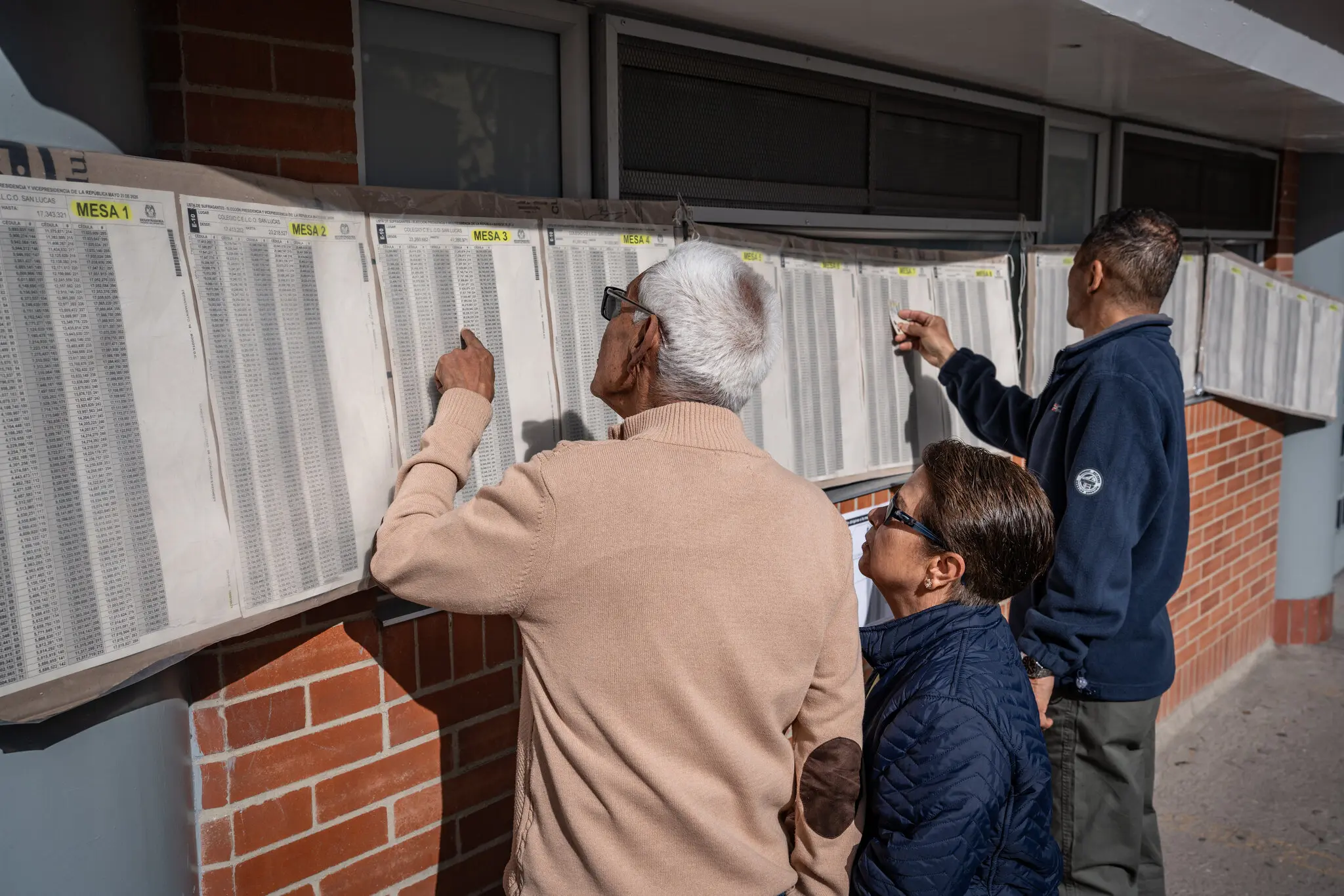
Following an election day that recorded the highest voter turnout in the country’s recent history, the Colombian political landscape was reshaped this Sunday with a result that places two opposing political projects on a direct path toward the presidency. Contrary to forecasts from several polls that had positioned the incumbent bloc as the favorite, criminal lawyer and political outsider Abelardo de la Espriella, running under the platform Defenders of the Homeland, won the first round with 43.7% of the vote. His opponent in the runoff on June 21 will be Iván Cepeda, from the Pacto Histórico, who secured 40.9%, consolidating a race marked by deep polarization and the eclipse of moderate options.
The rise of the radical right over more traditional sectors is one of the most significant developments of this election. The candidate from the Centro Democrático, Paloma Valencia, who had institutional backing from the Conservative, Liberal, and Party of the U, obtained just 6.92% of the vote—far below the 20% predicted by some pre-election polls. This result suggests that a significant portion of the moderate right electorate opted for De la Espriella as the most openly antagonistic option to “Petroism.” Meanwhile, the political center was largely pushed out of the competitive arena, with Sergio Fajardo receiving 4.26% and Claudia López failing to reach 1%.
The country’s electoral geography revealed a clear divide between urban centers and peripheral regions. De la Espriella won in 15 of the 32 departments, dominating the most populated and urbanized areas such as Antioquia, Cundinamarca, and the overseas vote. In contrast, Cepeda built a strong base in 16 departments and in Bogotá, securing strategic victories in the Caribbean coast, the Pacific region, and the south of the country. Notably, despite finishing second, the Pacto Histórico achieved a record 9 million votes, surpassing Gustavo Petro’s performance in the first round of 2022.
Looking ahead to the second round, Colombians will choose between two deeply divergent state models. De la Espriella proposes a drastic reduction of the size of the state, “law and order” policies inspired by models such as Nayib Bukele’s, and the use of technologies like blockchain to ensure transparency in public procurement. On the other hand, Iván Cepeda represents the continuation of the progressive project, with proposals focused on financial inclusion through a “People’s Bank,” the creation of a special anti-grand-corruption unit, and a review of trade agreements to protect food sovereignty.
Thus, the coming three weeks are expected to be highly intense. While De la Espriella enters with political momentum after exceeding expectations and with already announced support from Álvaro Uribe and Paloma Valencia, Cepeda is betting on mobilizing abstaining voters to reverse the trend.