
Peru Elections: Keiko Fujimori and Roberto Sánchez Face Off in the Runoff
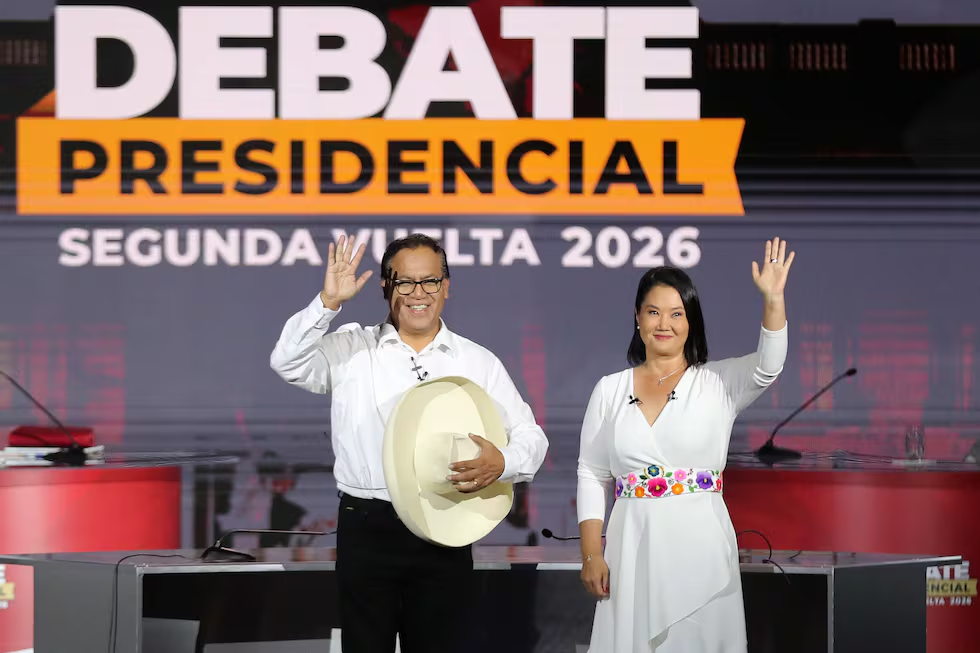
On June 7, Peru will hold its presidential runoff election, in which more than 27 million citizens will decide who will lead the country during the 2026–2031 term. The election pits Keiko Fujimori (Popular Force), who leads voting intention with 36.64% and draws most of her support from Lima and the coastal regions, against Roberto Sánchez (Together for Peru), who stands at 33.74% with a strong base in the interior and southern regions of the country. The electoral landscape is marked by the extreme fragmentation inherited from the first round, in which 35 candidates competed and neither finalist secured more than 18% of the vote individually, with both candidates together accounting for only 29% of the total vote. In this context, the 17.57% of blank or null votes and the 13.31% of undecided voters are emerging as the decisive factors in the final outcome.
Competing Proposals: Economy, Security, and Society
The candidates’ proposals reflect opposing models, particularly in the areas of economic policy and public security. Keiko Fujimori advocates maintaining the current economic model, focusing her agenda on macroeconomic stability, support for private investment, and formal mining activity. Among her key proposals are the strengthening of a deregulation shock aimed at reducing administrative procedures by 40%, the implementation of Special Economic Zones, and nutritional health programs. She also proposes modernizing foreign trade through artificial intelligence and improving liquidity for small and medium-sized enterprises through a national factoring program. On security, her message centers on restoring order through a “tough-on-crime” approach, stricter border controls, and the deportation of foreign nationals with criminal records.
Roberto Sánchez, meanwhile, proposes a structural transformation through a “new constitutional architecture” to be achieved via a Constituent Assembly. His economic plan seeks to move beyond the extractive model through industrialization and the strengthening of family farming, although his consensus platform now includes a commitment to preserving the autonomy of the Central Reserve Bank (BCR). On social issues, he advocates gradual increases in the minimum wage and reforms in the cultural sector to guarantee decent working conditions for artists. His security approach differs from that of his opponent by emphasizing internal reforms within the National Police and a community-based security system.
A Fragmented Congress and Judicial Pressures
Governability will be the main challenge for whoever takes office on July 28, given the composition of a newly restored bicameral Congress that is also highly fragmented. Popular Force is projected to become the largest minority bloc with 40 deputies and 22 senators, providing Fujimori with significant legislative backing and the capacity to block potential impeachment attempts. Under the new system, presidential removal motions will require a two-thirds majority in both chambers, meaning that a potential Sánchez administration—with a smaller representation of 31 deputies and 14 senators—would need to negotiate constantly to avoid the risk of removal from office.
Finally, both candidates enter the runoff under judicial scrutiny that could influence voters. Fujimori remains under investigation for alleged illicit campaign financing linked to undeclared contributions in previous electoral campaigns. Sánchez, for his part, faces a prosecutor’s request for a five-year prison sentence and disqualification from public office over alleged false reporting of campaign contributions in past elections. The immediate procedural developments in these cases, together with the decisions of center-right voters, will be key factors in determining who will assume the presidential sash on July 28.