
The USMCA’s first test: What is at stake for North American trade?
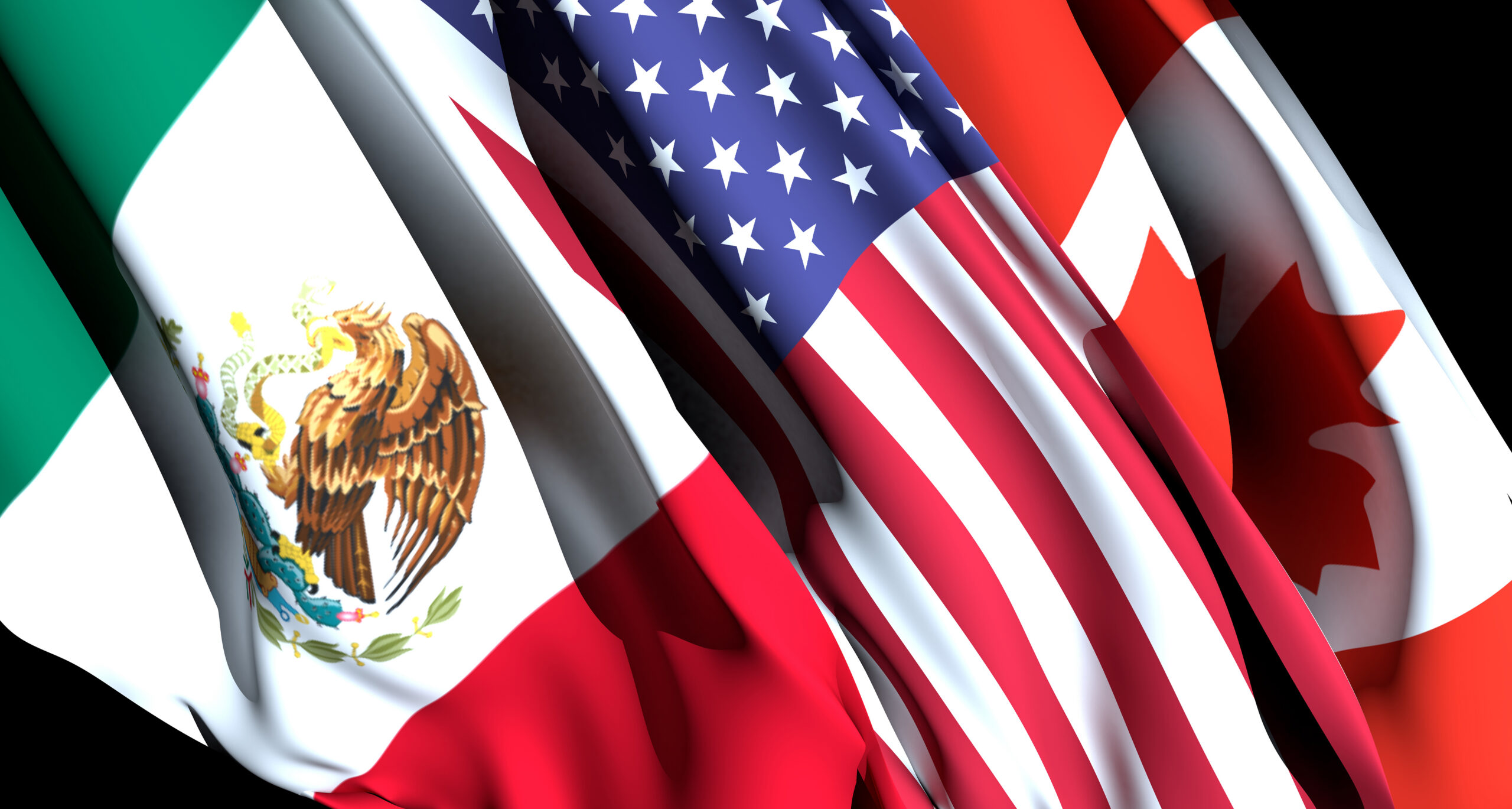
The agreement governing trade between Mexico, the United States, and Canada is reaching its first mandatory review. All three parties must decide by consensus whether to extend the treaty or allow it to move toward its scheduled expiration in 2036. For Mexico, trade with its northern partners represents 43.4% of its GDP.
On July 1, 2026, the first six-year cycle of the United States–Mexico–Canada Agreement (USMCA) will be completed, triggering its first formal review. This mechanism, designed to update the agreement and address frictions, represents a “stress test” for North America’s economic stability.
Since entering into force in 2020, the USMCA has supported key sectors such as automotive, agri-food, and digital services. Now, the three governments must reach a written consensus to extend the agreement. If they fail to do so, the treaty remains in force but becomes subject to annual reviews until its original expiration date.
Three possible scenarios
The future of the agreement after 2026 can be framed in three strategic paths analyzed in our report:
– Extension until 2042: The ideal scenario of trilateral consensus, which would extend the agreement for another 16 years.
– Prolonged negotiation: If no consensus is reached by July 1, annual review cycles would begin until 2036, introducing uncertainty into markets.
– Unilateral withdrawal: The least likely scenario, but one that remains a political leverage tool, especially in the context of government changes.
What each party is seeking
For Mexico, the importance of the USMCA is structural: trade with its northern partners accounts for 43.4% of its GDP. Total trade under the agreement amounts to US$ 806.094 billion, with the United States accounting for the bulk of flows at US$ 774.168 billion—equivalent to 83% of Mexican exports—while trade with Canada completes the total with the remaining US$ 31.926 billion. In this context, Mexico enters the negotiation seeking to extend the agreement with limited adjustments, without opening a full renegotiation. Its priorities include defending energy sovereignty, maintaining current rules of origin amid pressure to increase regional content, and ensuring that the USMCA remains the legitimate framework for regulating economic relations, limiting the discretionary use of tariffs for non-trade purposes such as migration or security.
The United States, meanwhile, enters the review from a position of relative strength and with a broad agenda. It seeks to reduce its bilateral trade deficits—over US$ 171 billion with Mexico and nearly US$ 62 billion with Canada—tighten rules of origin to exclude Chinese inputs, strengthen patent and copyright protections, and secure commitments from its partners on migration and security as conditions for renewal. It also demands non-discriminatory access for U.S. technology platforms in both markets.
Canada, for its part, aims to renew the agreement with safeguards against unilateral tariff measures, resolve long-standing disputes in sectors such as forestry—where the United States applies countervailing duties that Ottawa considers unjustified—and remove tariffs on steel and aluminum imposed by Washington outside the agreement. Its stated objective is to strengthen dispute settlement mechanisms in order to reduce discretionary actions by the parties.
We invite you to read our full report, where we analyze the key actors and the detailed implications for the different chapters of the agreement.