
Elections in Peru: Fujimori Leads as the Country Moves Toward a Runoff in a Reconfigured Political Landscape
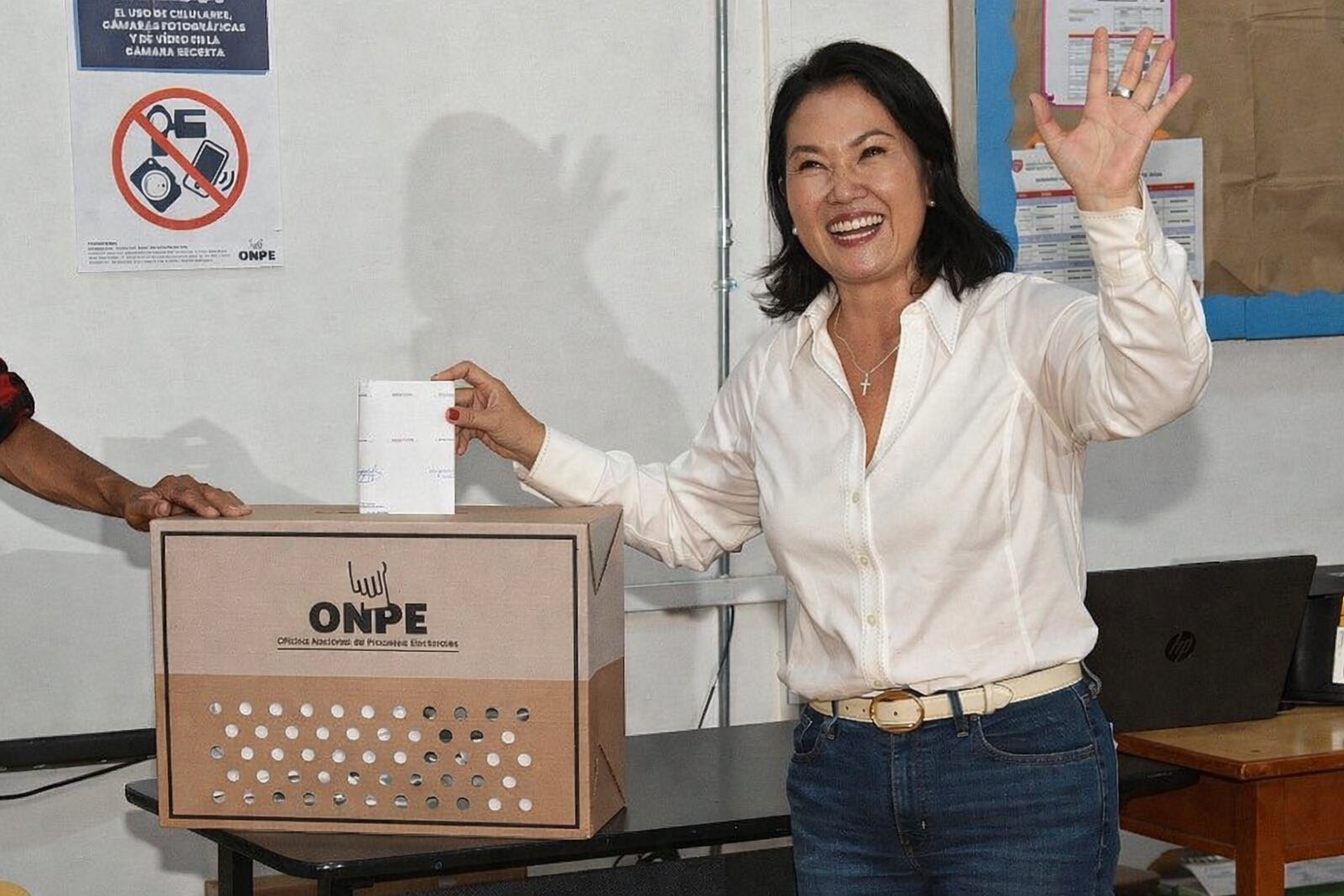
Peru held general elections this Sunday to elect the Presidency of the Republic, two vice presidencies and, following the return to bicameralism, a new Congress for the 2026–2031 term. With 54.32% of ballots counted, Keiko Fujimori (Fuerza Popular) leads with 16.96% of the vote, followed by Rafael López Aliaga (Renovación Popular) with 14.53% and Jorge Nieto Montesinos (Partido del Buen Gobierno) with 12.82%. No candidate surpassed the 50% threshold required to win in the first round, meaning the country is heading to a runoff scheduled for 7 June. While Fujimori has already secured her place in the second round, the identity of her opponent remains uncertain in a highly competitive race for second place.
The election took place in a context of significant political fragmentation, with a large number of candidates and relatively low levels of voter support for the leading contenders. The process was also marked by logistical issues related to the delivery of electoral materials at several polling stations, which led authorities to extend voting hours in Metropolitan Lima to ensure participation. Despite criticism from some candidates, these incidents are not expected to significantly alter the overall trend of the results, particularly in the presidential race.
At the legislative level, preliminary results point to a less fragmented Congress for the 2026–2031 period. Unlike the outgoing legislature—characterised by the presence of more than a dozen political groups—the new Congress is expected to be concentrated around five forces with effective representation in both chambers. Fuerza Popular emerges as the dominant bloc, with a projected 43 deputies and 22 senators, although without an outright majority. It is followed by Renovación Popular, Partido Cívico Obras, Ahora Nación and Partido del Buen Gobierno, shaping a scenario in which coalition-building will be essential for governance.
Looking ahead to the runoff, the political landscape remains open—not only due to the uncertainty surrounding the second candidate, but also because of the need to build broader coalitions in a context of low electoral support. The fragmented vote in the first round suggests that alliances and cross-party endorsements will play a decisive role in the second round. In this scenario, the next administration will face a dual challenge: securing sufficient political backing in Congress and ensuring governability in an institutional setting that, while less fragmented, will still require broad consensus to function effectively.