
Directorio Legislativo Participated in the Regional Dialogue on Digital Governance in Uruguay
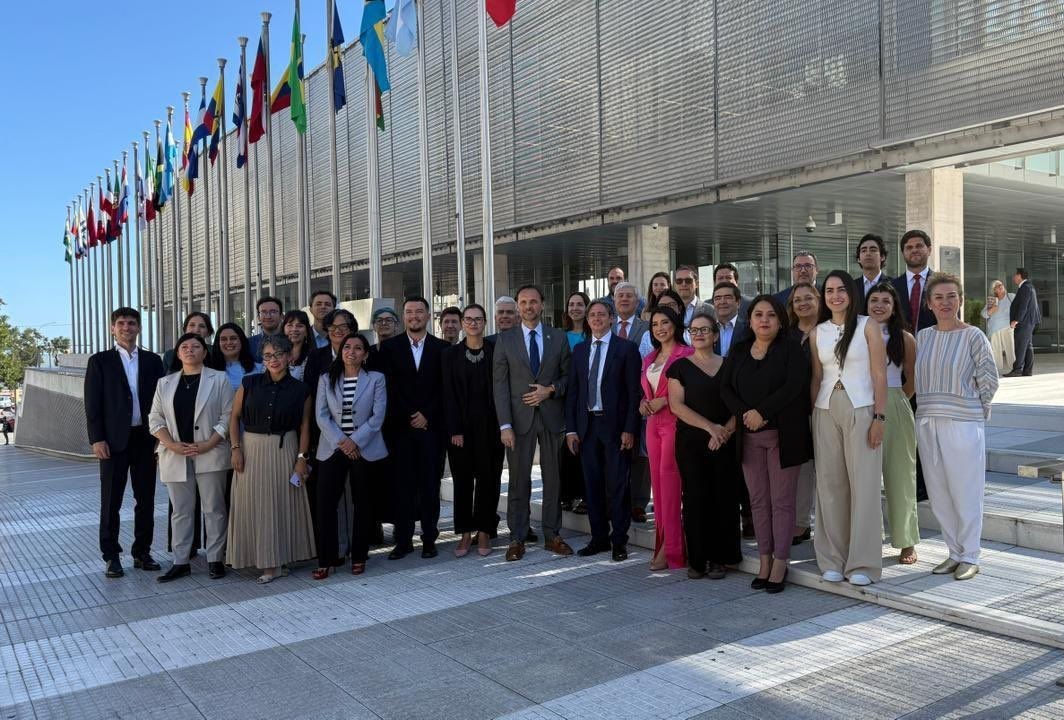
From November 26 to 28, Directorio Legislativo took part in the Third Dialogue on the Challenges of Digital Governance in Latin America and the Caribbean, organized by CAF – the Development Bank of Latin America and the Caribbean – and the United Nations Development Programme (UNDP), in Montevideo, Uruguay.
Over three days, experts, public officials, representatives from the private sector, academia, and civil society organizations discussed how to guide technological progress—particularly the accelerated development of artificial intelligence—toward a model of development that is more inclusive, sustainable, and respectful of human rights. The event revolved around a central premise: digital transformation is already reshaping the social, political, and economic life of the region, and its proper governance will be key to preventing it from deepening existing inequalities.
Speaking in one of the sessions, Juan Krahl, DL’s Coordinator of Citizenship and Government Institutions, stressed the importance of advancing a responsible, people-centered approach in the region. “It is essential to design digital transformation models with this in mind and avoid widening the gaps between vulnerable and more privileged sectors. In many countries, citizens no longer find in democracy the responses to their needs, and that opens the door to alternatives outside of it. The region needs to discuss what the limits of this transformation are and which values we are not willing to compromise,” he emphasized.
Throughout the dialogue, participants examined the impacts of new technologies on employment, education systems, civic life, and public management. They also addressed the opportunities created by the digitalization of state services, as well as challenges related to algorithmic bias, privacy, cybersecurity, and technological dependence.
The dialogue highlighted the need to strengthen regulatory frameworks, expand digital infrastructure, and ensure the equitable implementation of innovation. It concluded with a shared vision underscoring that technological acceleration requires stronger institutions, well-coordinated public policies, and regional cooperation to turn digital advancements into real opportunities for all citizens.