
The 2026–2027 Edition of the Argentine Legislative Directory Was Presented
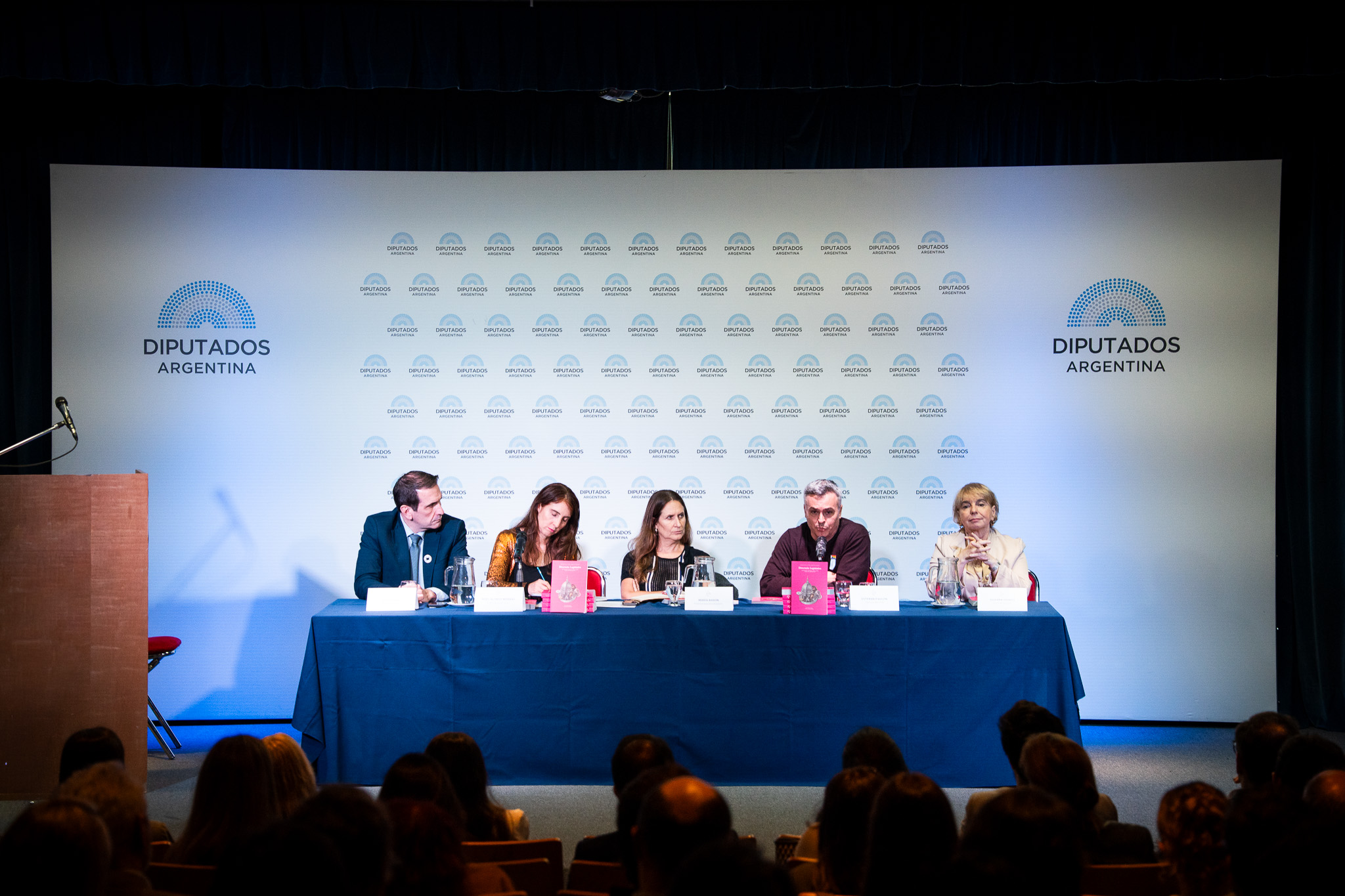
Legislators and experts discussed the need to strengthen a culture of institutional openness, highlighted persistent transparency challenges in Argentina’s provincial legislatures, and reflected on the challenges of communicating parliamentary work in the digital era.
Directorio Legislativo presented the 14th edition of the Argentine Legislative Directory 2026–2027: Who Our Legislators Are and How They Represent Us, a publication that provides updated information on the composition of Argentina’s National Congress following the 2025 elections, the background of its members, and the functioning of the Legislative Branch.
The event took place at the Auditorium of the Chamber of Deputies of Argentina and was led by Directorio Legislativo’s Executive Directors, María Baron and Noel Alonso Murray. The main panel featured National Deputy Silvana Giudici, National Senator Pablo Cervi, and National Deputy Esteban Paulón. National Senator Gonzalo Guzmán and National Deputy Maximiliano Ferraro were also in attendance, along with legislators, journalists, academics, students, volunteers, and representatives of civil society organizations.
The publication is available in print and can also be accessed through the online platform legisladores.directoriolegislativo.org.

Opening the event, Noel Alonso Murray explained that the publication serves as “a snapshot of Congress at a specific moment in time,” allowing citizens to understand who their legislators are and how they represent them. She also highlighted the challenges involved in gathering this information: “As surprising as it may seem, we still struggle to get many legislators to complete this information. If we do not make the effort to go office by office, legislator by legislator, that information is lost and becomes inaccessible.”
National Deputy Silvana Giudici emphasized the publication’s importance in strengthening democracy, noting that “the transparency and oversight that a parliamentary institution must uphold depend on citizens’ ability to monitor it.” She also stressed that making parliamentary work accessible is essential to “building an informed citizenry.”
National Senator Pablo Cervi addressed the need to regulate lobbying in order to “make decision-making processes more transparent” and clarify relationships that currently remain informal. He also reaffirmed his commitment to an open-door approach to public service, stating that “we seek openness because public debates must take place in full view of society.”
National Deputy Esteban Paulón argued that there is still “an unfinished transparency agenda in Congress.” He also reflected on the role of digital platforms, stating that “today, social media has become the public square—the space for public debate,” and therefore should be approached with the same level of responsibility traditionally expected of the media.
Closing the event, María Baron acknowledged the progress made by Argentina’s National Congress in advancing transparency while emphasizing that significant challenges remain, particularly in provincial legislatures. She underscored the importance of continuing to strengthen access to public information as a means of bringing legislative work closer to citizens.

About the Argentine Legislative Directory
The Argentine Legislative Directory is an initiative launched by Directorio Legislativo in 2000 with the goal of making public information about Argentina’s National Congress and its members more accessible. Since then, it has been published after every legislative renewal and has inspired similar initiatives in other countries across the region, including Mexico and Colombia.
The publication includes biographical information on legislators, their professional backgrounds, political experience, parliamentary activity, and contact details. It also provides institutional information on congressional committees, the structure of Congress, and the legislative process.
The initiative also includes a digital platform offering standardized, comparable, and open data, making it a valuable resource for legislators, journalists, researchers, civil society organizations, and citizens.